Master's degree candidates in the Department of Communication Sciences and Disorders ran the weekly aphasia sessions.
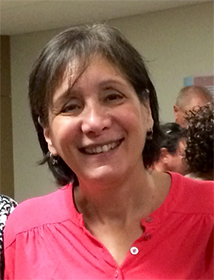
Bonnie Soman, M.S. ’75, Au.D. ’95, served as the department’s clinical director for 22 years before retiring in May 2014.
Eight adults afflicted with language impairment sit in a room at the and identify music from TV shows of a bygone era: The Brady Bunch, Gilligan���s Island and I Love Lucy. It���s a form of reminiscence therapy designed to test patients��� recognition and improve their speech and communication.
Similar exercises occur during one-hour sessions in the fall, spring and summer while the patients��� family members meet in another room to share experiences as part of decades-long effort to serve the community through on the campus and Brooklyn’s Adelphi Academy campus.
���By coming to these meetings, we���ve learned that we���re not the only ones dealing with this,��� said Tom Leibowitz of Glendale, New York, a support group member whose wife Barbara attends aphasia sessions. ���We meet other people who are going through the same thing and exchange ideas.���
Student clinicians Karen Andersen, Jessica Milano, Alison Stogel and Linda Sulaiman, master���s degree candidates in the , ran the weekly summer sessions in Garden City under the supervision of Bonnie Soman, M.S. ���75, Au.D. ���95. Dr. Soman was the department���s clinical director for 22 years before retiring in May. She���s now a clinical supervisor in the department.
The aphasia group has three goals, Dr. Soman said:
(1)泭泭 泭Therapeutic���to improve the participants��� communication abilities.
(2)泭泭泭 Support���to allow participants to share experiences.
(3)泭泭泭 Social���to provide a relaxed and accepting venue to interact with others.
Individual therapy is also available in the aphasia program, which provides invaluable clinical experience for students.
���The program is very hands-on, and I like that,��� said Sulaiman, an international student from . ���It���s great to see the difference in the patients from the beginning of the program to the end���from being shy and withdrawn to being expressive. It shows how the therapy really makes a difference.
Sandy Slattery, an aphasia patient from Franklin Square, New York, echoes that sentiment. ���I was scared when I first came here because I didn���t know what to expect,��� she said. ���But this program has turned everything around for me.���
Slattery���s husband, Tom, who attends support group meetings, said, ���We tell everybody about the Adelphi program because it���s been such a positive experience.���
For further information, please contact:
Todd Wilson
Strategic Communications Director泭
p ��� 516.237.8634
e ��� twilson@adelphi.edu